
Attic Mold in Charleston Homes
Dark staining on the roof sheathing, a musty attic or frost-like spots around the nails? We connect Charleston-area homeowners with local mold inspection and remediation companies for free, no-obligation quotes on attic mold cleanup and the moisture problems behind it.
Get a Free Quote Call (727) 300-6656Where attic mold comes from
Attics in the Lowcountry work hard. Summer sun bakes the roof, outdoor air is humid for months (the SC State Climatology Office puts Charleston’s August mean relative humidity at 79%), and storms test every shingle and flashing detail. NOAA’s 1991–2020 normals show about 52.5 inches of rain a year at Charleston International Airport, with the heaviest totals from June through September, right in hurricane season. Mold shows up when moisture collects on the underside of the roof deck, on rafters or in insulation and does not dry out.
The usual causes:
- Roof leaks. Damaged shingles, failed flashing around chimneys and vents, or wind-driven rain after a storm can wet the sheathing a little at a time.
- Poor ventilation. Blocked soffit vents, too few ridge or gable vents, or insulation stuffed against the eaves trap warm, moist air.
- Exhaust fans venting into the attic. Bathroom, kitchen and dryer vents that dump humid air into the attic instead of outside are a classic cause.
- HVAC equipment and ducts. Air handlers and ducts in a hot attic can sweat, and a clogged condensate line or pan can overflow. See HVAC and duct mold.
- Air leaks from the house. Gaps around light fixtures, the attic hatch and plumbing stacks let indoor moisture rise into the attic.
Attic mold often goes unnoticed because few people go up there. Signs include dark or blotchy staining on the sheathing, a musty smell near the attic hatch, damp or compressed insulation, rusty nail tips and water stains on ceilings below.
What an attic mold company typically does
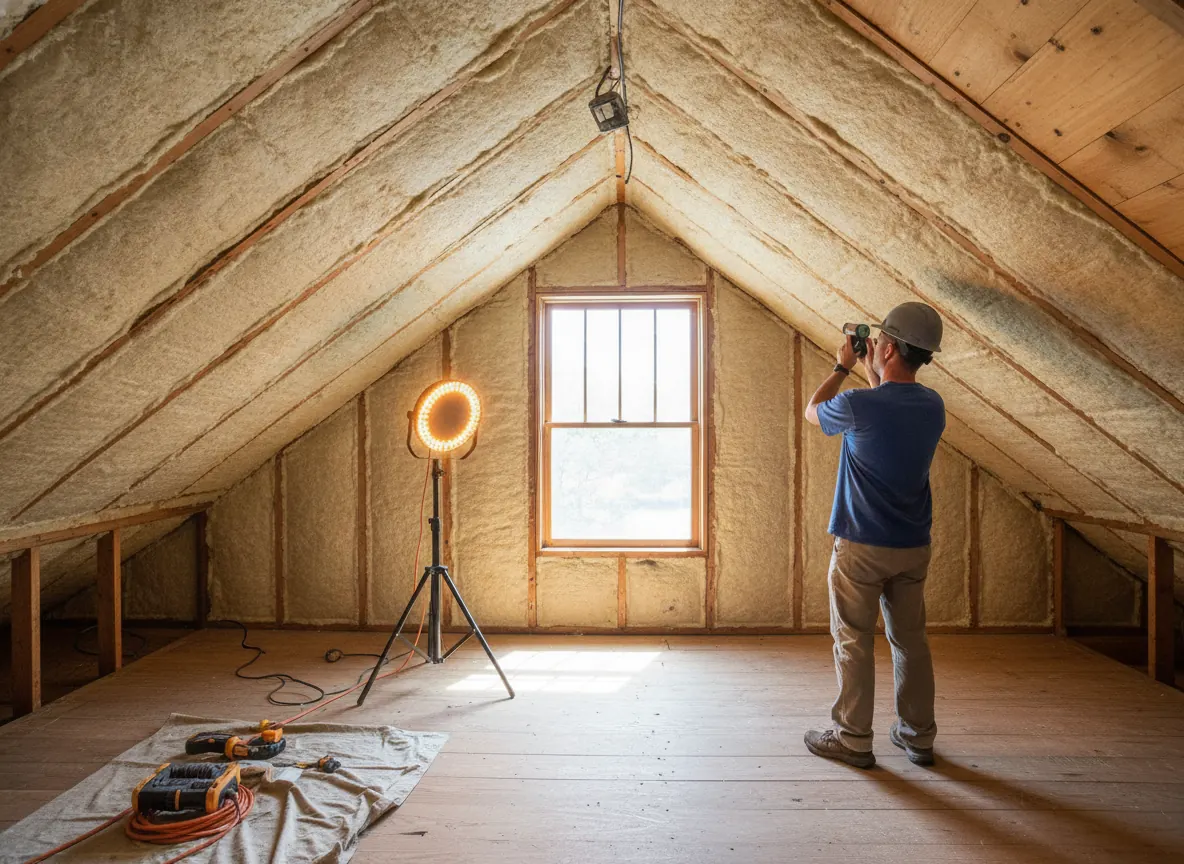
A remediation company will typically begin by finding out why the attic is wet: checking the roof deck for leaks, looking at soffit and ridge ventilation, tracing exhaust fan ducts and inspecting any HVAC equipment up there. Cleaning mold without fixing that cause tends to buy only a season or two.
The cleanup itself usually involves containing the attic hatch area so spores do not drop into living space, HEPA-vacuuming the sheathing and framing, and then cleaning, sanding, or in some cases applying an encapsulating coating to stained wood. Wet or moldy insulation is commonly removed and replaced once the attic is dry.
Fixing the cause may involve a roofer, an HVAC contractor or an insulation installer in addition to the remediation company. Get each part of the scope in writing so nothing falls between trades.
How an attic mold job usually goes
The full mold remediation process explains containment, cleanup and clearance in more detail.
Request quotes
Describe what you see on our free quote form; photos from the attic hatch help. We usually reply the same day.
Find the moisture source
Roof leaks, ventilation, exhaust fans and HVAC equipment are checked before any cleaning plan is set.
Written scope
Compare what each company will clean, what insulation comes out and which repairs are included.
Cleanup
Sheathing and framing are HEPA-vacuumed and cleaned; damaged insulation is bagged and removed.
Fix and rebuild
Roof repairs, ventilation changes, rerouted exhaust fans and new insulation as needed.
Check back
Ask whether a follow-up look after the next stretch of humid weather or heavy rain is included.
What attic mold removal typically costs
Typical national ranges from cost guides, 2024–2026 — not quotes.
| Item | Typical range |
|---|---|
| Attic mold | $1,000–$9,000 |
| Per square foot of affected area | $10–$30 |
| Mold inspection | $450–$800 (HomeAdvisor data via Bob Vila: $299–$1,014, avg about $656) |
The spread is wide because attics vary: a few stained rafters near one leak cost far less than mold across the whole roof deck plus new insulation. Roof or ventilation repairs are usually priced separately. The real figure comes from the company’s on-site assessment. See the mold remediation cost guide for more detail, and our article on attic mold removal for whether it needs to come out at all.
If an attic leak has also stained walls or ceilings below, read about mold removal inside the house.
South Carolina has no mold-specific license. South Carolina’s environmental agency (SCDES) says there are no state or federal laws, regulations or standards for mold, and it cannot test or inspect for mold in homes. A bill (H.5109) to create a state mold board was introduced in 2026 but has not passed as of October 2026. So ask any company about its training and certifications, its insurance, and the SC contractor license or registration for any rebuild work, and get the scope in writing. See what South Carolina law says. This is general information, not legal advice.
Frequently asked questions
Does attic mold need to be removed?
Attic mold signals a moisture problem, and leaving it means wood and insulation keep getting wet. Small, old, dry stains may be less urgent than active growth, but either way the cause should be found and fixed. A company can tell you whether cleaning, coating or replacing materials makes sense for what is in your attic.
Will mold in the attic spread into the house?
Attic air can reach living space through gaps around light fixtures, the attic hatch and ductwork, and HVAC equipment in the attic can draw air from it. That is why remediation companies typically contain the hatch area during cleanup and why sealing air leaks is often part of the fix. Talk to a doctor about any health concerns.
How much does attic mold removal cost?
Cost guides put attic mold removal at roughly $1,000–$9,000, depending on how much of the roof deck is affected and whether insulation must be replaced. Roof, ventilation or exhaust fan repairs are usually extra. These are national estimates; the real price comes from the company after an on-site look at your attic.
What causes black stains on attic sheathing?
Common causes include roof leaks, poor ventilation, bathroom or dryer vents exhausting into the attic, and warm, humid air leaking up from the house. Not every dark stain is active mold; some is old water staining. An inspection with a moisture meter can show whether the wood is still wet and where the moisture is coming from.
Seeing or smelling mold? Get a clear plan.
Free, no-pressure quotes across Charleston, Mount Pleasant, North Charleston, Summerville and the Lowcountry.