
If you have found mold in a Charleston-area home, one of the first questions is who you can trust to deal with it. Many homeowners assume there is a state mold license to check, the way there is for electricians or home builders. In South Carolina, there is not. This post explains what the state's environmental agency says, where a 2026 bill stands, which contractor license and registration rules can still apply to the repair work, and what to ask any company before you sign.
This is general information, not legal advice. Rules change, and the details of your project matter. For a question about your specific situation, check with the state agency named below or an attorney.
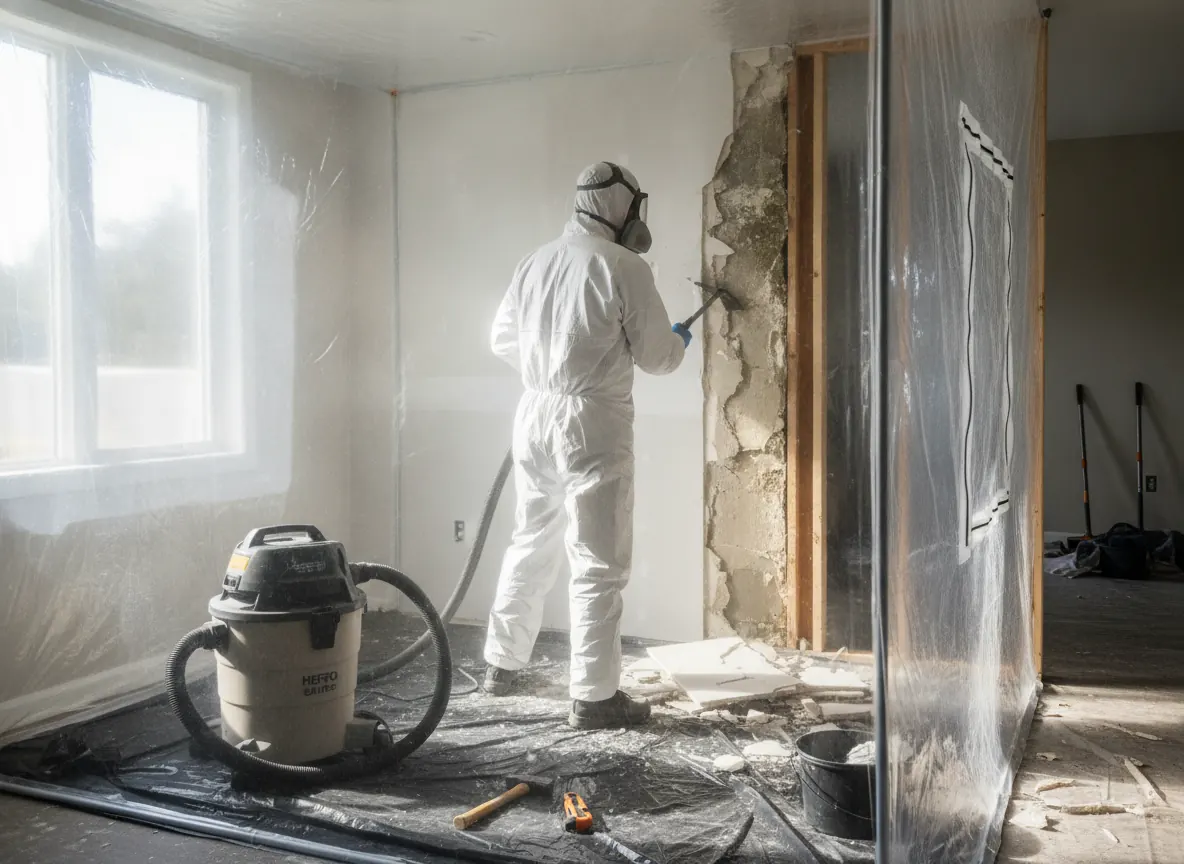
Does South Carolina have a mold law?
Short answer: not a mold-specific one. South Carolina's Department of Environmental Services (SCDES, which took over this topic from DHEC) says that "because there are no state or federal laws, regulations, or standards for mold or indoor air quality," the agency "cannot test, monitor or inspect for mold or indoor air quality in homes or public buildings."
The Post and Courier reached the same conclusion in its reporting (published in 2019 and updated in 2022): "South Carolina has no licensing program for mold inspection or removal." Nothing found as of October 2026 changes that picture.
In practice, that means:
- There is no state "mold inspector" or "mold remediator" license number to look up.
- There is no state agency that will come to your house to test for mold.
- There is no state standard that says how a mold job must be done or when it is "clear."
So if a company tells you it holds a "South Carolina mold license," ask exactly what it means, because the state does not issue one.
Do mold remediation companies need a license in SC?
For the mold work itself (setting up containment, removing and cleaning moldy materials, air filtration), there is no state mold license to hold. That does not mean every part of a mold project is unregulated. Most real mold jobs have two halves: the cleanup, and the rebuild. Once wet drywall, insulation, flooring or ductwork comes out, something has to go back in, and that build-back work can fall under South Carolina's contractor rules.
Where SC contractor rules can apply: the rebuild
South Carolina Code Title 40, Chapter 59, administered by the Residential Builders Commission at the Department of Labor, Licensing and Regulation (LLR), sets dollar thresholds for residential work:
| Type of work | When a license or registration is required | Source |
|---|---|---|
| Residential builder | "When the cost of the undertaking exceeds five thousand dollars"; bond of "not less than fifteen thousand dollars" | SC Code §40-59-20(6); §40-59-220(C) |
| Residential specialty contractor (registration) | "When the undertakings exceed five hundred dollars" (raised from $200 in 2022) | SC Code §40-59-20(7) |
| General and mechanical contracting | "A license is now required when the total cost of construction is greater than $10,000" | SC Contractor's Licensing Board, 2023 legislative update |
LLR's specialty classifications that commonly come up after mold cleanup include Insulation Installers, Dry Wall Installers, Carpenters, Floor Covering Installers and Painters/Wallpaperers. A specialty registrant is limited to three classifications.
What this means for a homeowner: if the mold project includes replacing drywall, insulation, flooring or HVAC equipment above those dollar amounts, ask who is doing that part of the work and what SC license or registration covers it. Sometimes the cleanup company handles the rebuild; sometimes it hands off to a builder or HVAC contractor. Either is common. The point is to know which, and to see it in writing.
If your home is in the City of Charleston's Special Flood Hazard Area, permits can also come into play for repairs. Our post on mold after a hurricane or king tide covers that.
What is H.5109, the 2026 mold bill?
A bill, H.5109, was introduced in the South Carolina House on February 5, 2026. It would create a South Carolina Mold Assessment and Remediation Board under LLR, with certification for people who do this work. Its last recorded action, that same day, sent it to the House Labor, Commerce and Industry Committee. It has not passed as of October 2026.
If it, or a later bill, becomes law, the rules described above would change. Until then, a mold-specific credential in South Carolina comes from private training organizations, not the state.
What the EPA says about hiring help
With no state standard, the EPA's guidance is the most widely cited reference. A few points worth knowing:
- "If the moldy area is less than about 10 square feet," the EPA says a homeowner can usually handle it. Our post on the EPA 10-square-foot rule explains where that line sits.
- If you hire someone, the EPA says to "make sure the contractor has experience cleaning up mold."
- "If you clean up the mold, but don't fix the water problem, then, most likely, the mold problem will come back." Any plan should name the moisture source.
- "In most cases, if visible mold growth is present, sampling is unnecessary." See do you need mold testing? for when testing does help.
Questions to ask any mold company in South Carolina
Because there is no state mold license to check, the burden falls on you to ask. These questions cover the gaps:
What mold training and certifications does your crew have?
Ask which organization issued them and when. Private certifications exist; the state does not issue one.
What insurance do you carry?
Ask for a certificate of insurance, including general liability, and whether it covers mold work specifically.
Who does the rebuild, and under what SC license or registration?
If drywall, insulation, flooring or HVAC work is above the thresholds in the table above, get the name and LLR license or registration of whoever does it.
What is the moisture source, and how will it be fixed?
A plan that removes mold without addressing the leak, humidity or flooding is likely to be repeated.
Can I have the scope in writing?
Square footage, materials to be removed, containment, cleaning method, drying and who verifies the result. A written scope makes quotes comparable.
Who does post-remediation testing, if any?
Some homeowners prefer a separate company for testing so the remover is not grading its own work. See mold inspection & testing.
How this site fits in
Charleston Mold Experts is a free quote service. We connect Charleston-area homeowners with local mold inspection and remediation companies for free, no-obligation quotes. We do not do mold work ourselves, and we do not certify or license the companies you hear from, so the questions above are worth asking every one of them. For an idea of what typical jobs cost before you call, see our mold remediation cost guide and the mold removal page, or request free quotes now.
Frequently asked questions
Is there a mold license in South Carolina?
No. South Carolina's Department of Environmental Services says there are no state or federal laws, regulations or standards for mold, and the state has no licensing program for mold inspection or removal. A bill, H.5109, was introduced in 2026 but has not passed as of October 2026. This is general information, not legal advice.
Does a mold company need a contractor license in SC?
Not for the mold cleanup itself. Rebuild work can be different: SC Code §40-59-20 requires residential specialty registration above $500 and a residential builder license above $5,000, and general or mechanical contracting needs a license above $10,000. Ask who does the rebuild and what covers it. This is general information, not legal advice.
Will SCDES test my house for mold?
No. South Carolina's environmental agency says it cannot test, monitor or inspect for mold or indoor air quality in homes or public buildings. If you want testing, you would hire a private company. The EPA notes that when mold is visible, sampling is usually unnecessary, so ask what a test would change before paying for one.