
Attic mold is one of the most common things Lowcountry homeowners find when they finally climb up with a flashlight, often during a home inspection, after a storm or while chasing a musty smell. The short answer to the question in the title is that mold growing on roof decking, rafters or insulation generally should be cleaned up, but cleaning it is only half the job. The other half, and the half that decides whether it comes back, is fixing the moisture.
Charleston Mold Experts is a free quote service: we connect Charleston-area homeowners with local mold inspection and remediation companies for free, no-obligation quotes. This guide explains what those companies typically look at so you can compare quotes with confidence.
Does attic mold need to be removed?
The EPA's homeowner guidance is built around two steps: control the moisture and clean up the mold. In its words, "If you clean up the mold, but don't fix the water problem, then, most likely, the mold problem will come back." That is why a good attic quote usually reads like two projects in one: a moisture fix (a roof repair, a ventilation change, rerouting an exhaust fan) and the cleanup itself.
Whether you need a company or can handle it yourself depends mostly on size. EPA says that if the moldy area is less than about 10 square feet, a homeowner can usually handle it. Attic growth often covers much more than that, since it tends to spread across whole sections of roof sheathing, and attics are hot, cramped and hard to work in safely. Our guide to the EPA 10-square-foot rule covers where that line sits.
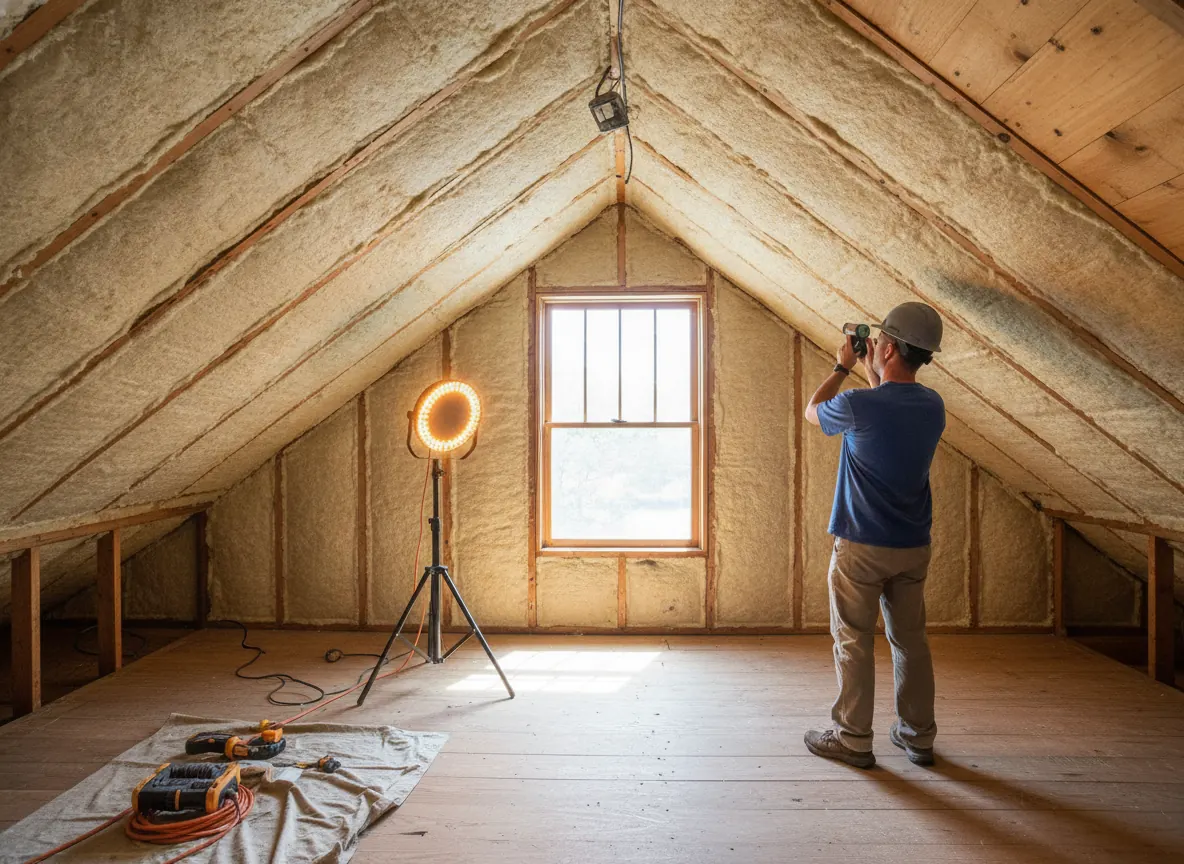
What causes attic mold in Charleston homes?
Mold needs moisture, and an attic gets it from a handful of predictable places. Charleston's climate raises the stakes: NOAA's 1991–2020 normals put annual rainfall at Charleston International Airport at 52.51 inches, with June through September delivering about half of it, and the SC State Climatology Office lists average August relative humidity in Charleston at 79%.
Roof leaks
Leaks around flashing, vents, chimneys, skylights or storm-damaged shingles tend to leave localized patterns: a stain or patch of growth near one penetration, damp insulation directly below, sometimes a ceiling stain in the room underneath. After a hurricane or a hard summer storm, these are the first places worth checking. Fixing the roof comes before, or alongside, any mold cleanup.
Ventilation and trapped humid air
Widespread, evenly spread discoloration across large areas of roof decking points more often to an air problem than to a single leak. Common culprits include soffit vents blocked by insulation, too little exhaust ventilation at the ridge, and humid indoor air leaking up through gaps around light fixtures, the attic hatch or plumbing chases.
Bathroom, kitchen and dryer exhaust
Exhaust fans that dump into the attic instead of venting outdoors deliver warm, wet air straight onto cooler surfaces. This is a frequent find and usually a straightforward fix by a qualified tradesperson.
HVAC equipment and ductwork in the attic
Where an air handler or ducts run through the attic, condensation, a clogged drain line or leaky, poorly insulated ductwork can wet nearby framing and insulation. Our article on mold coming through AC vents covers that side of the problem.
Will mold in the attic spread into the house?
This is one of the most-searched attic questions, and the honest answer is that it depends on the house. Attics are meant to be separated from living space, but in practice air moves through gaps, and ductwork running through an attic is another possible pathway. An on-site assessment can look at how your attic connects to the rest of the home. We don't give medical advice; if anyone in the household has symptoms or health concerns, talk with a doctor.
What attic mold removal usually involves
Every company has its own method, and the scope depends on what it finds. A typical attic job may include:
- Assessment: finding the moisture source and measuring how much material is affected.
- Moisture fix: roof repair, ventilation changes or rerouting exhaust fans, sometimes handled by a separate trade.
- Containment: limiting the spread of dust and spores into the living space below during the work.
- Cleanup: cleaning or removing affected surfaces on decking and framing, and removing wet or contaminated insulation.
- Drying and rebuild: confirming materials are dry, then replacing insulation or decking as needed.
Rebuild work matters for paperwork. South Carolina has no mold-specific license, and a bill (H.5109) to create one was introduced in 2026 but has not passed as of October 2026. Related build-back work is different: under SC Code §40-59-20, residential specialty contractors such as insulation installers must register with the state when the work exceeds $500, and a residential builder license applies when the cost of the job exceeds $5,000. Read more in our post on South Carolina mold license law. This is general information, not legal advice.
How much does attic mold removal cost?
Cost guides give a wide range because attics vary so much in size, access and damage. These are typical national ranges from cost guides, 2024–2026, not quotes:
| Item | Typical range |
|---|---|
| Attic mold (This Old House / Fixr) | $1,000–$9,000 |
| Per square foot of affected area | $10–$30 |
| 100 sq ft affected | $1,000–$2,500 |
| 200 sq ft affected | $2,000–$5,000 |
| Mold inspection (if you want one first) | $450–$800 |
The things that push an attic quote up are usually the amount of decking affected, whether insulation has to come out and be replaced, tight or low-slope attics that are slow to work in, and any roof or ventilation repair bundled into the job. The real price comes from the company's on-site assessment. See the full mold remediation cost guide for other locations in the home, and our attic mold page for how quotes are put together.
Questions to ask before you hire
Because there is no state mold license to check, the questions you ask carry more weight. Ask each company:
- What do you think caused this, and does your quote fix the cause or only the mold?
- What training and certifications do your workers have, and what insurance do you carry?
- Who handles the roof, ventilation and insulation work, and does that firm hold the SC contractor license or registration the job requires?
- How will you contain the work area and protect the rooms below?
- What exactly is included, in writing, and how will you show the attic is dry when you finish?
EPA's own advice for anyone hiring help is to "make sure the contractor has experience cleaning up mold." Getting two or three written scopes is the easiest way to compare.
Frequently asked questions
Does attic mold need to be removed?
In most cases, yes, along with the moisture problem that caused it. EPA guidance notes that if you clean up mold but don't fix the water problem, the mold will most likely come back. Small, dry spots may be manageable; larger areas, wet insulation or a leaking roof usually call for a remediation company plus the right repair trade.
How much does attic mold removal cost?
Typical national ranges from cost guides run about $1,000 to $9,000 for attic mold. This Old House lists $1,000 to $4,000 and Fixr lists $1,500 to $9,000. Per square foot of affected area, guides show roughly $10 to $30. These are estimates, not quotes; the real price depends on an on-site assessment.
Will mold in the attic spread into the house?
It depends on the home. Attic air does not always stay in the attic, and ductwork or an air handler located there can be a pathway. Whether that matters in your house is something an on-site assessment can check. If anyone in the home has health concerns, talk with a doctor.
Can I just paint over or spray attic mold?
Coating over growth without fixing the leak or ventilation problem rarely solves anything, because the moisture that fed the mold is still there. Ask any company you talk to how it plans to deal with the source of moisture, and get the full scope, including any insulation or decking replacement, in writing.
Get attic mold quotes in the Charleston area
If you've found growth in your attic, a free, no-obligation quote request takes about a minute. We usually reply the same day, and you decide whether to move forward. You might also find these useful: Do you need mold testing? and mold coming through your AC vents.