
Mold Inspection & Testing in Charleston
Musty smell, stains on the plaster or a leak you only just found? We connect Charleston-area homeowners with local mold inspection and remediation companies for free, no-obligation quotes. Tell us what you’re seeing and we’ll help you compare options.
Get a Free Quote Call (727) 300-6656Why mold is hard to judge on your own in the Lowcountry
Mold needs moisture, and Charleston supplies plenty of it. The SC State Climatology Office puts Charleston’s August mean relative humidity at 79%, higher than Columbia or Greer, and NOAA’s 1991–2020 normals show about 52.5 inches of rain a year at Charleston International Airport, roughly half of it falling from June through September. Add a slow plumbing leak, a sweating air handler or a roof that let water in during the last storm, and growth can start where nobody looks: behind baseboards, inside wall cavities, under sinks, in the crawl space or above the ceiling.
Spotting a patch of mold is usually the easy part. The hard part is knowing how far it goes, what caused it and whether the job is small enough to handle yourself. That is what a mold inspection is for. A good inspection ends with a written picture of where the moisture is coming from and what needs to happen next, which is exactly what you need to compare remediation quotes fairly.
Situations where a professional inspection usually makes sense:
- A persistent musty odor with no visible source
- Staining, bubbling paint or soft drywall near bathrooms, the kitchen or the HVAC closet
- Water intrusion from a storm, flood, king tide, roof leak or plumbing failure
- Visible growth that looks larger than about 10 square feet
- A home purchase or sale, or an insurance claim, where you need documentation
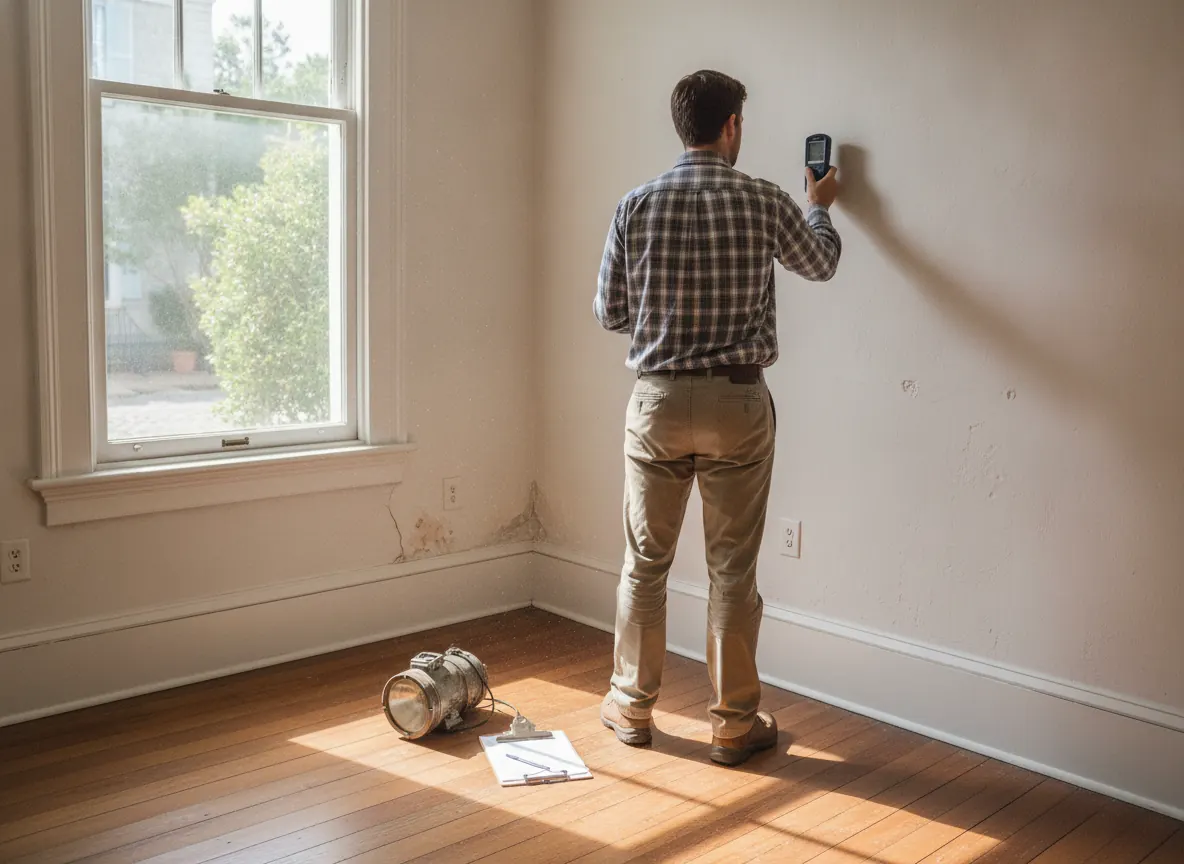
What a mold inspector typically does
An inspection is diagnosis, not removal. A typical visit starts with questions about leaks, odors and past water events. The inspector then walks the home with a moisture meter, and often a thermal camera, checks suspect walls, ceilings and floors, and looks at the usual trouble spots in Lowcountry homes: the crawl space, the attic and the HVAC system.
If sampling would answer a real question, the inspector collects air or surface samples for a lab. The result is a report describing where the mold is, what likely caused it and what a remediation company should do about it.
Testing is not always needed. The EPA’s mold guide says, “In most cases, if visible mold growth is present, sampling is unnecessary.” If you can already see the mold, the money is often better spent finding the moisture source. Our guide on whether you need mold testing goes deeper.
How a mold inspection usually works
For what happens after the inspection, see the full mold remediation process.
Tell us what you’re seeing
Use the free quote form to describe the odor, stains, leak or storm damage, plus your ZIP code. We usually reply the same day.
Compare inspection quotes
We connect you with local companies that serve your part of the Lowcountry. Ask each one what the visit includes, whether lab samples cost extra and how soon you get the report.
The on-site inspection
The inspector checks for moisture and visible growth, and samples only if it helps answer a specific question about the home.
Review the written findings
A useful report names the moisture source, the affected areas and a recommended scope you can hand to several mold removal companies for comparable bids.
Clearance check after the work
Many homeowners have an inspector come back after remediation to confirm the area is dry and the scope was completed. Ask whether that is included or priced separately.
Choosing an independent inspector
Some companies both test for mold and remove it. That can be convenient, but it also means the business that writes the scope is the business that gets paid to do it. Many homeowners prefer an inspector who has no stake in the remediation job, so the report reads as an independent second opinion and the post-job clearance check means something.
Questions worth asking any inspector:
- Do you also perform remediation, and would you bid on this job?
- What training and certifications does the person doing the inspection hold?
- Will you take samples, and if so, why, and what will they tell us?
- Which lab analyzes the samples, and how are results explained?
- What insurance does your company carry?
South Carolina has no mold-specific license. South Carolina’s environmental agency (SCDES) says there are no state or federal laws, regulations or standards for mold, and it cannot test or inspect for mold in homes. A bill (H.5109) to create a state mold board was introduced in 2026 but has not passed as of October 2026. So ask any company about its training and certifications, its insurance, and the SC contractor license or registration for any rebuild work, and get the scope in writing. See what South Carolina law says. This is general information, not legal advice.
What mold inspection and testing typically cost
Typical national ranges from cost guides, 2024–2026 — not quotes.
| Item | Typical range |
|---|---|
| Mold inspection | $450–$800 (HomeAdvisor data via Bob Vila: $299–$1,014, avg about $656) |
| Air sample testing | $250–$350 (advanced up to $700) |
| Mold remediation, typical job | $1,200–$3,750 (This Old House avg about $2,300); Fixr avg about $3,500 |
The real price depends on the size of the home, how many areas need checking, crawl space and attic access, and how many samples go to the lab. The actual figure comes from the company’s own assessment. For remediation prices by square foot and by size, see the Charleston mold remediation cost guide.
Seeing mold in a specific spot? Read about crawl space mold, attic mold or HVAC and duct mold. We help homeowners across Mount Pleasant, North Charleston, Summerville and the rest of our service areas.
Frequently asked questions
Do I need mold testing if I can see the mold?
Often not. The EPA says that in most cases, if visible mold growth is present, sampling is unnecessary. Testing makes more sense when you smell mold but cannot find it, need documentation for a sale or insurance claim, or want a clearance check after remediation. Ask any inspector to explain what a sample would tell you before you pay for it.
How much does a mold inspection cost in Charleston?
Cost guides put a typical mold inspection at about $450–$800, and HomeAdvisor data cited by Bob Vila shows $299–$1,014 with an average around $656. Air sample testing typically adds $250–$350, or up to $700 for advanced testing. These are national estimates; the real price comes from the company after it learns about your home.
Does South Carolina license mold inspectors?
No. South Carolina has no mold-specific license, and the state environmental agency says it cannot test or inspect for mold in homes. A 2026 bill, H.5109, would create a state mold board, but it has not passed as of October 2026. Ask inspectors about their training, certifications and insurance. This is general information, not legal advice.
Should the same company inspect and remove the mold?
It is your choice, but many homeowners prefer an independent inspector who will not bid on the removal. That way the scope is written by someone with no stake in the size of the job, and a clearance check after remediation is a genuine second opinion. Either way, get the findings and the remediation scope in writing.
How long does a mold inspection take?
Timing depends on the size of the home and how many areas need checking, such as the crawl space, attic and HVAC system. Ask each company how long the visit usually runs and how soon the written report arrives, especially if lab samples are involved, since the lab adds its own turnaround time before results come back.
Seeing or smelling mold? Get a clear plan.
Free, no-pressure quotes across Charleston, Mount Pleasant, North Charleston, Summerville and the Lowcountry.