
How Getting Mold Help Works
Charleston Mold Experts is a free quote service. We connect Charleston-area homeowners with local mold inspection and remediation companies for free, no-obligation quotes. Here is our part, and what a professional mold job typically involves.
Get a Free QuoteOur part: getting you quotes
We do not inspect or remediate anything ourselves. The company you choose does the work.
You share the details
Fill out the free quote form or call Call (727) 300-6656. Tell us where you see or smell mold (crawl space, attic, walls, HVAC), roughly how big the area is, and whether there was a leak, flood or storm. Photos help if you have them.
We connect you with local companies
We pass your request to mold inspection or remediation companies that serve your part of Charleston and the Lowcountry. We usually reply the same day.
You compare quotes and decide
Companies typically schedule a visit, look at the space and give you a written scope and price. There is no obligation to hire anyone, and you choose which company, if any, to work with.
Before you hire: questions to ask
South Carolina's environmental agency says there are no state or federal laws, regulations or standards for mold, and the state has no mold-specific license. A bill (H.5109) was introduced in 2026 but has not passed as of October 2026. So ask each company:
- What mold training or certifications do your workers have?
- Can you show proof of insurance?
- Who does rebuild work, and what SC contractor license or registration covers it?
- What is in the written scope, and what is not?
More in our guide to South Carolina mold law.
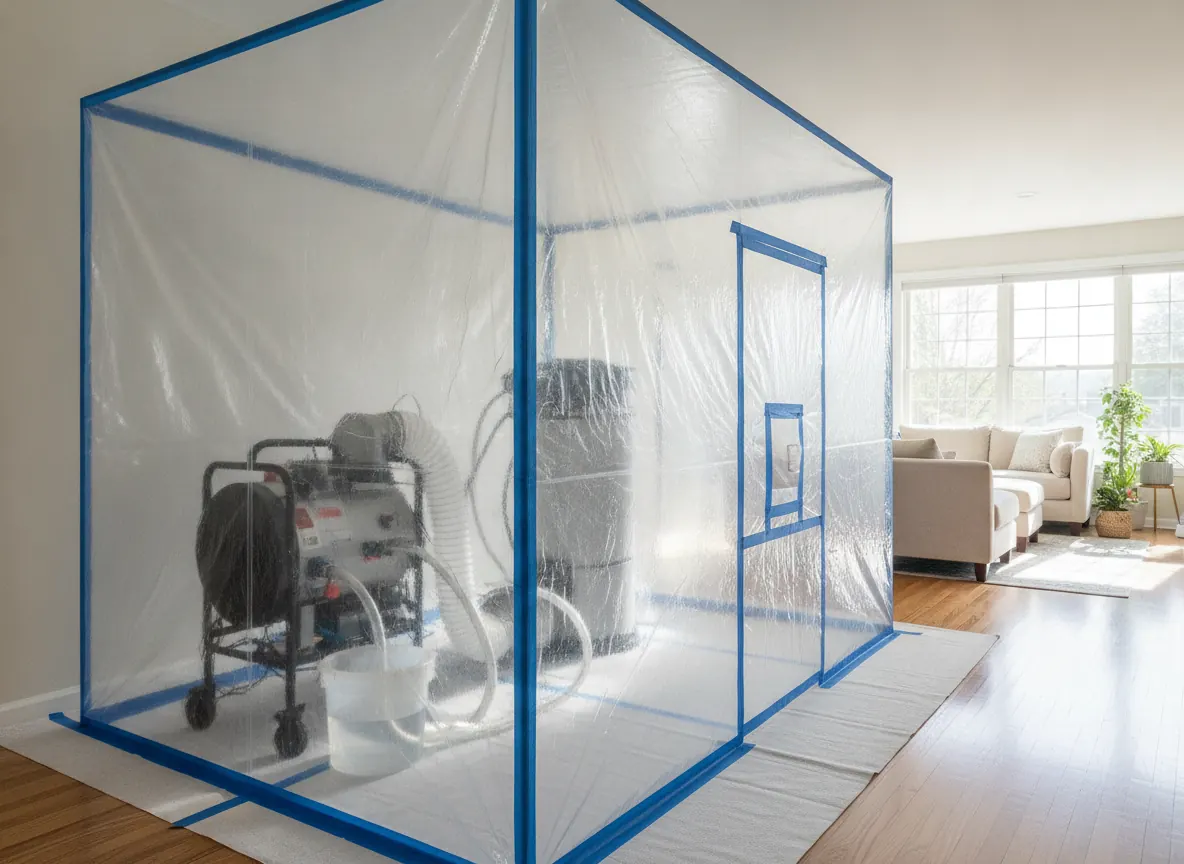
What typically happens on a professional mold job
Every company works a little differently, and small jobs skip some steps. This is the general sequence most remediation companies follow, in line with EPA guidance. Ask the companies quoting your job to explain how they handle each step.
Inspection and assessment
A company typically starts by looking at the affected area, checking moisture with a meter, and asking about leaks, floods or storms. In most cases, the EPA says, sampling is unnecessary when mold is visible, but a company may suggest testing when mold is hidden or suspected. The visit usually ends with a written scope and price.
Fix the moisture source
The EPA is clear that if you clean up the mold but don't fix the water problem, the mold problem will most likely come back. That may mean a roof or plumbing repair, better attic ventilation, a bath fan vented outdoors, or controlling humidity in a crawl space. Sometimes this work is done by a separate trade.
Set up containment
For larger areas, a remediation company typically seals the work zone with plastic sheeting and a zipper door and runs an air scrubber or negative air machine to keep spores from spreading to the rest of the house. HVAC vents in the area are usually covered.
Remove and clean
Porous materials with mold growth, such as drywall, insulation and carpet, are usually bagged and removed. Hard surfaces like framing and joists are typically cleaned, often with HEPA vacuuming and wiping. Workers generally wear protective equipment while they work.
Dry the structure
Dehumidifiers and fans dry the framing and remaining materials. The EPA and South Carolina's environmental agency both say water-damaged areas should be dried within 24 to 48 hours to prevent mold growth, so drying is a central step after leaks and floods.
Clearance check
When the work is done, the area is typically checked visually and with a moisture meter. Many homeowners also order clearance testing, ideally from a tester who is independent of the remediation company, before walls are closed up.
Rebuild or encapsulate
Finally, removed drywall, insulation, flooring or trim is replaced, and in crawl spaces the company may recommend encapsulation with a vapor barrier and dehumidifier. In South Carolina, rebuild work can require a contractor license or registration under SC Code §40-59-20. This is general information, not legal advice.
How long does mold remediation take?
It depends on the size of the area, how wet the structure is and whether rebuild is involved. A small, contained area may take a day or two. Larger jobs with drying, clearance testing and rebuild can stretch longer, and waiting on a separate roofer, plumber or contractor adds time. Ask each company for a timeline in its quote.
What it costs
Cost guides put a typical job at about $1,200–$3,750, or roughly $10–$30 per square foot of affected area. See the mold remediation cost guide and calculator, or browse common questions on our mold FAQ. For mold behind walls and ceilings, see mold removal; for raised homes, see crawl space mold.
What to have ready when companies call
Quotes go faster when you can share a few basics: when you first noticed the mold or odor, any recent leaks, storms or high-tide flooding, photos of the affected areas, whether anyone has already tested, and whether you plan to file an insurance claim. If you rent, loop in your landlord or property manager early.
If you have health concerns about mold exposure, talk to your doctor.
Seeing or smelling mold? Get a clear plan.
Free, no-pressure quotes across Charleston, Mount Pleasant, North Charleston, Summerville and the Lowcountry.