
How to Spot Mold on Walls in Charleston, and Who to Call in South Carolina
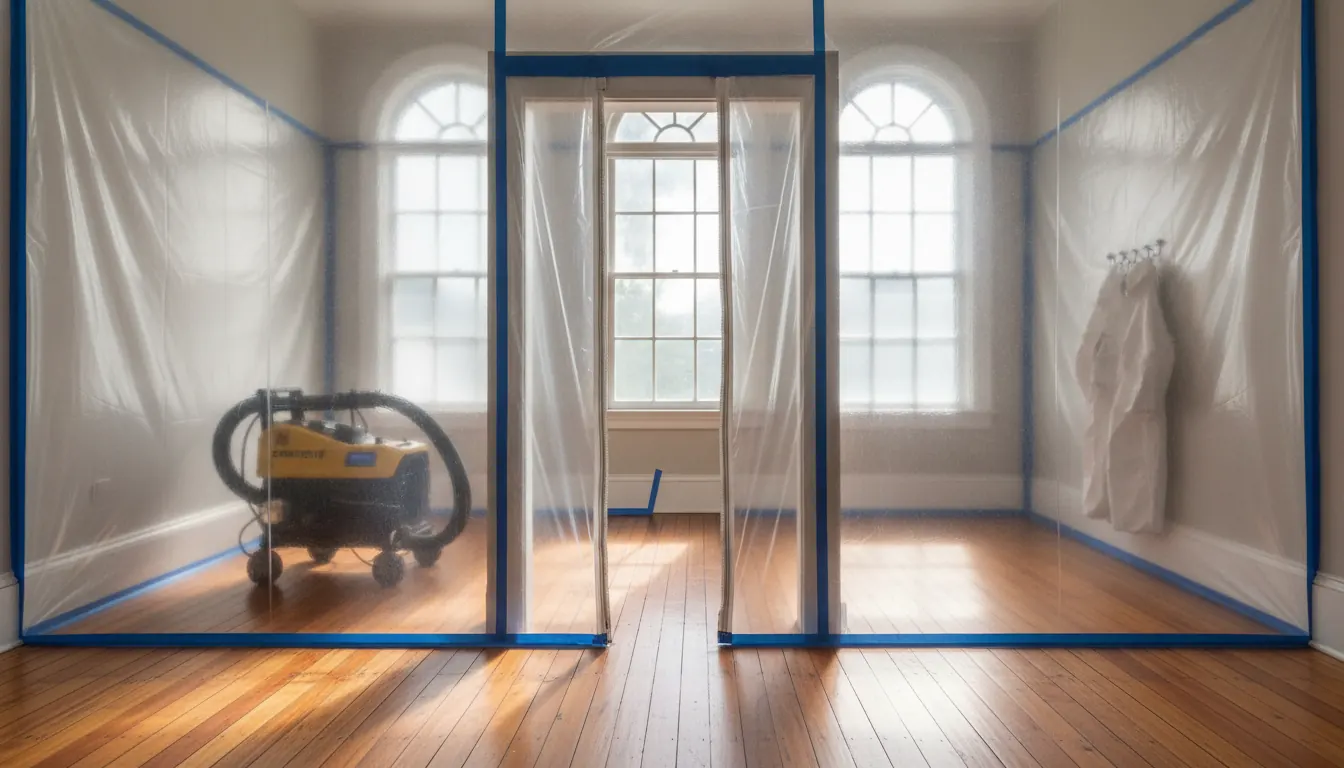
Mold on a wall usually shows up as speckled gray, green or black patches, a stain that comes back after you wipe it, or paint that bubbles and peels, often with a musty smell close by. In South Carolina there is no state office that will come and look at it: the state’s environmental agency says it cannot test, monitor or inspect for mold in homes. So who you call depends on what you find. The EPA says a patch under about 10 square feet is usually a homeowner job. A larger area, mold that keeps coming back, or a smell you can’t trace is the point to call an independent local mold inspection or remediation company.
Charleston Mold Experts is a free quote service. We connect Charleston-area homeowners with local mold inspection and remediation companies for free, no-obligation quotes. Independent local companies do the work; this guide helps you work out which kind of company to call.
Why Lowcountry walls grow mold
Mold needs moisture, and the Charleston area has plenty. NOAA’s 1991–2020 normals put annual rainfall at Charleston International Airport at 52.51 inches, and about half of it falls from June through September. The SC State Climatology Office puts average August relative humidity in Charleston at 79%, higher than Columbia or Greer at 76%. July nights average a low of 73.7°F. That adds up to months of warm, damp air against every wall in the house.
Then there’s water that actually gets inside. Tropical Storm Debby dropped 18.25 inches of rain on Summerville over five days in August 2024. NOAA’s derived-threshold count for the Charleston Harbor gauge recorded 19 minor high-tide flood days in 2023. If a wall took on water in events like those, check it first.
Housing age plays a part too. Census figures put the median year built at 1970 in the Town of James Island and 1986 in Hanahan, compared with 2002 in Goose Creek. An older house isn’t automatically a moldy one. It has just had more decades of storms, roof wear and plumbing in which a slow leak could go unnoticed. The EPA puts it plainly: “If you clean up the mold, but don’t fix the water problem, then, most likely, the mold problem will come back.”
How to spot mold on a wall: where to look
- Low on the wall. Baseboards and the bottom foot or two of drywall after any flood, king tide or plumbing leak.
- High on the wall. Corners where the wall meets the ceiling below a bathroom, the attic or a roof valley. Mold here can point to a problem overhead (see attic mold).
- Around windows and exterior doors, especially on the side of the house that takes wind-driven rain.
- Behind furniture on outside walls, where air barely moves.
What you’re looking for: patches that look fuzzy or speckled rather than a flat tan ring, stains that come back a week or two after cleaning, paint that blisters, and drywall that feels soft or crumbly. A musty smell in one room is worth following even when nothing shows on the surface.
Who to call in South Carolina, by situation
A small patch with an obvious cause
If the area is under about 10 square feet and the cause is clear (say, a bathroom without a working fan), the EPA says a homeowner can usually handle it. Our post on the EPA 10-square-foot rule covers where that line sits.
More than 10 square feet, or water got in
This is a job for a mold remediation company. The EPA and South Carolina’s environmental agency both say water-damaged areas should be dried within 24 to 48 hours to prevent mold growth, so after a leak or storm, don’t wait to see whether spots appear. See mold removal in Charleston and flood and water damage mold.
A smell, but no visible mold
Book a mold inspection, which usually includes moisture readings and can find growth hidden inside a wall. If you can already see the mold, the EPA says “sampling is unnecessary” in most cases, so ask what a test would change before you pay for one. More on mold inspection and testing.
Drywall has to come out and go back
South Carolina has no mold-specific license, but the rebuild can be regulated. SC Code §40-59-20 requires residential specialty contractor registration when the work exceeds $500, and the state licensing agency (LLR) lists Dry Wall Installers as one of those specialty classifications. Ask who will hang the new drywall and what registration covers it. Our South Carolina mold law guide has the full picture. This is general information, not legal advice.
Your home is in a City of Charleston flood zone
The City of Charleston requires a permit for work on existing structures in Flood Zones AE and VE, including non-structural interior renovations (drywall isn’t named explicitly), and permits must be obtained before the repair work is completed. Check with the City’s Permit Center before the wall is closed up.
What wall mold typically costs
Typical national ranges from cost guides, 2024–2026, not quotes:
| Item | Typical range |
|---|---|
| Per square foot of affected area | $10–$30 |
| About 50 sq ft | $500–$1,250 |
| About 100 sq ft | $1,000–$2,500 |
| About 200 sq ft | $2,000–$5,000 |
| Mold inspection | $450–$800 (HomeAdvisor data via Bob Vila: $299–$1,014, avg about $656) |
The real price comes from an on-site assessment. Our mold remediation cost guide breaks it down further.
Before anyone opens the wall
- What is feeding the mold, and how will that be fixed?
- What mold training and certifications do you have, and what insurance do you carry?
- Can I have the scope in writing: square footage, materials removed, containment, drying, and who checks the result?
If you’re on James Island or in another older neighborhood, see our James Island mold remediation page, or request free quotes from local companies now.
Frequently asked questions
Can I just paint over mold on a wall?
Painting over mold hides it without dealing with either the growth or the moisture feeding it. The EPA says that if you clean up mold but don’t fix the water problem, the mold will most likely come back, and paint alone does neither. Clean small areas properly, find the source of the dampness, and call for help if the patch is larger than about 10 square feet.
Will South Carolina send someone to look at mold on my wall?
No. South Carolina’s Department of Environmental Services says that because there are no state or federal mold standards, it cannot test, monitor or inspect for mold or indoor air quality in homes. Any inspection is something you arrange privately with a local company. South Carolina also has no mold-specific license. This is general information, not legal advice.
How much mold on a wall can I clean up myself?
The EPA says that if the moldy area is less than about 10 square feet, a homeowner can usually handle it. That’s roughly a three-foot by three-foot patch. Beyond that, or if the mold came from flooding, keeps returning or you can smell it but can’t find it, getting an independent local company to look at it is the safer call.